
The biggest mistake companies make is trying to automate everything at once. This leads to “automated chaos.” In 2026, the secret to a high-ROI transition is staged deployment.
By following the Dexin Technology 30-Day Sprint, you can replace repetitive manual tasks with autonomous AI agents that work 24/7.
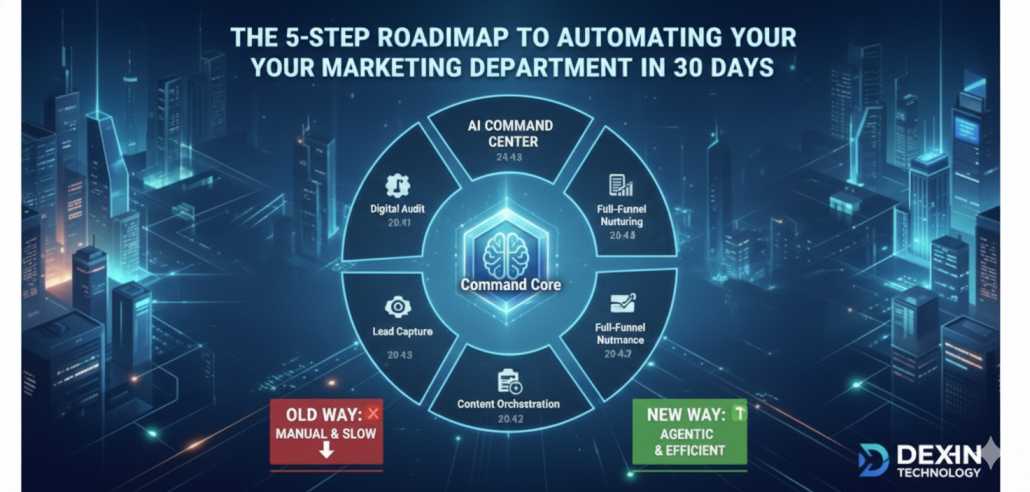
Step 1: The “Digital Audit” & Infrastructure Setup (Days 1–7)
You cannot automate what you haven’t mapped. The first week is dedicated to the “Digital Backbone.”
- Audit Repetitive Tasks: Use a “stopwatch audit.” Which tasks (data entry, lead routing, post-scheduling) take more than 5 hours a week?
- Integrate the CRM: Ensure your CRM (HubSpot, Salesforce, or Klaviyo) is the “Single Source of Truth.”
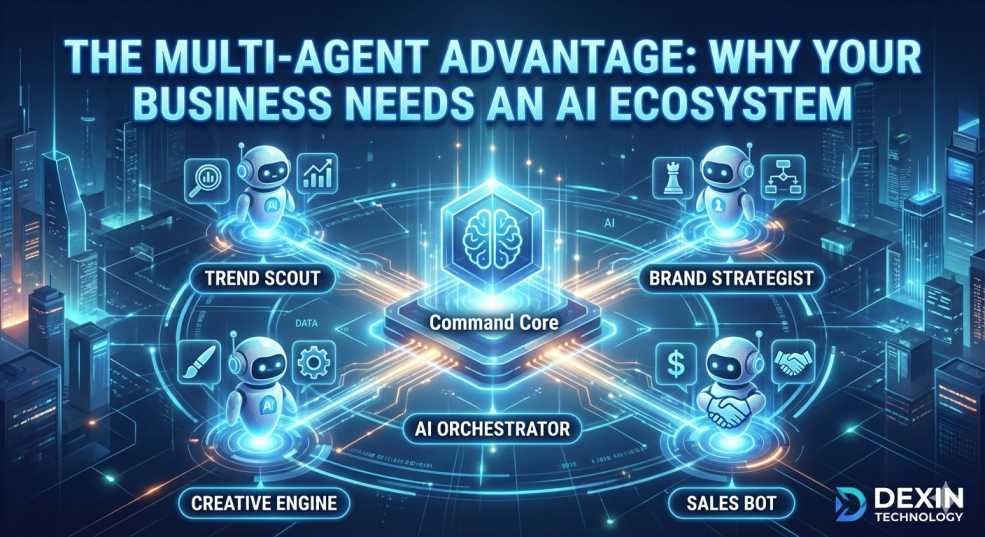
- Deploy “Trend Scout” Agents: Set up autonomous agents to monitor market shifts and competitor ads so you start with data, not guesses.
LSI Keywords: Infrastructure assessment, marketing technology audit, CRM integration, automated data cleaning.
Step 2: Automated Lead Capture & Instant Response (Days 8–14)
Week two focuses on the “Front Office.” The goal is to ensure no lead ever waits more than 60 seconds for a response.
- AI Sales Agents in DMs: Replace basic chatbots with Agentic Sales Closers on Instagram, LinkedIn, and your website.
- Automated Lead Scoring: Implement AI that scores leads based on intent (browsing patterns) rather than just clicks.
- Instant Welcome Sequences: Trigger a personalized “Welcome & Value” series the millisecond a lead opts in.
Step 3: Content Orchestration & Personalization (Days 15–21)
Now, we automate the “Content Factory.” By 2026, static content is dead; dynamic content is the standard.
- Deploy a Content Orchestrator: This agent takes one core idea (like a blog) and automatically reformats it into 10 social posts, a newsletter, and a video script.
- Dynamic Personalization: Set up “Send-Time Optimization” where emails are delivered when each individual user is most likely to open them.
- AI Visual Engine: Integrate tools to automatically generate on-brand graphics for every automated post.
Keywords in Heading: Autonomous content factory, multi-channel personalization, AI creative automation.
Step 4: Full-Funnel Nurturing & Retargeting (Days 22–27)
Week four is about “Retention & Closing.” We build the logic that keeps your brand top-of-mind without human intervention.
- Behavioral Triggers: If a lead views your pricing page three times but doesn’t buy, trigger an automated “Special Offer” or a “Case Study” via SMS/Email.
- Autonomous Ad Management: Use AI agents to monitor your Meta and Google ad spend. If an ad’s ROI drops at 3:00 AM, the agent pauses it and redistributes the budget instantly.
- Omnichannel Loops: Ensure your WhatsApp, Email, and Social ads are “talking” to each other so the customer sees a consistent message.
Step 5: Optimization & The “Human-in-the-Loop” (Days 28–30)
Automation is a co-pilot, not an autopilot. The final days are for governance.
- Command Center Setup: Create a dashboard that shows the ROI of your agents in real-time.
- Guardrail Review: Ensure all AI outputs align with your brand voice and compliance standards.
- Scaling Plan: Identify the next department (Customer Service or Sales) to integrate into the marketing ecosystem.
The 30-Day ROI Impact
| Metric | Before Automation | After 30 Days |
| Lead Response Time | 2–12 Hours | < 60 Seconds |
| Weekly Manual Labor | 40+ Hours | < 8 Hours |
| Content Output | 2 posts/week | 10+ posts/week |
| Lead Conversion | Industry Average | +25–40% |
Conclusion: Your Future Starts at Day 31
Automating your marketing department isn’t about replacing your team; it’s about upgrading them. When you remove the “grunt work,” your marketers can focus on high-level strategy and creative breakthroughs.
Dexin Technology has the blueprint ready. Are you ready to scale?