
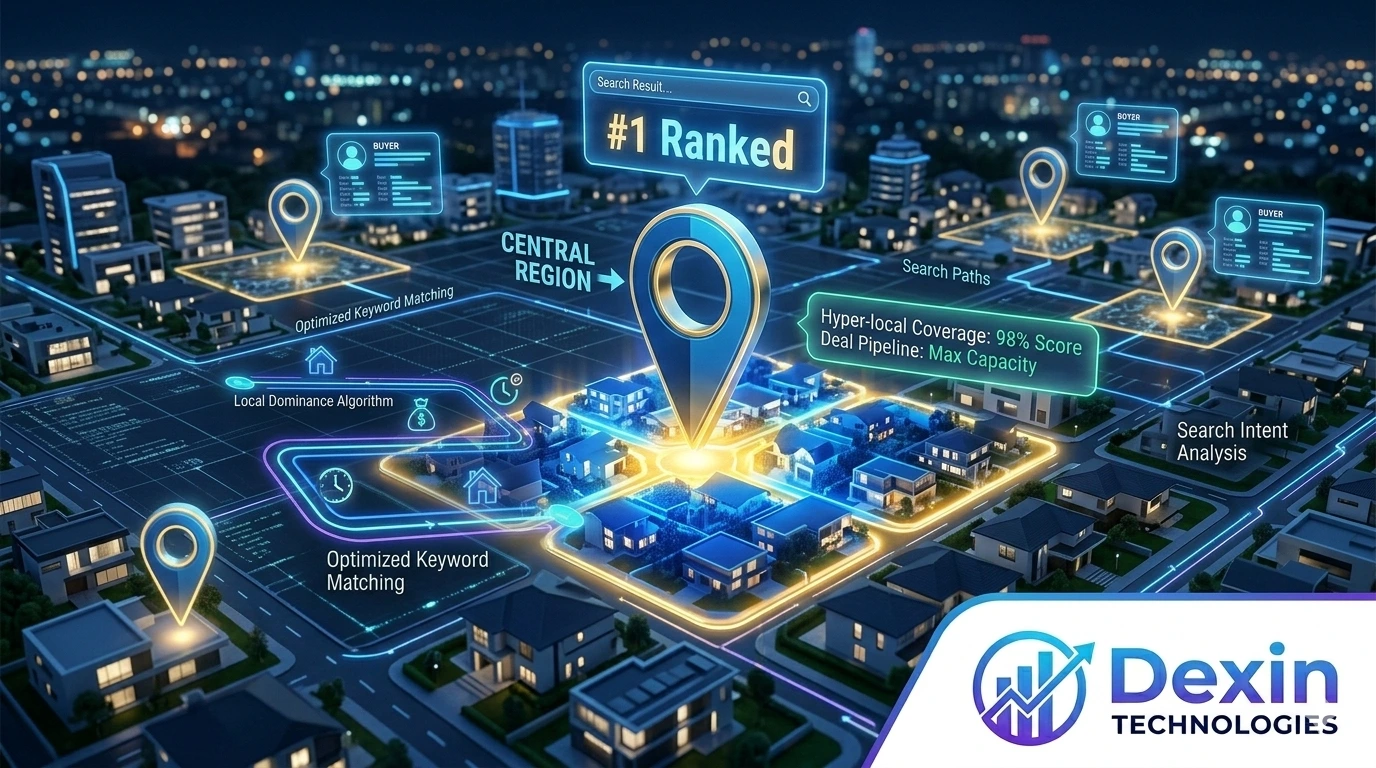
The era of “Real Estate Agent in [City Name]” is over. In 2026, search engines are powered by hyper-precision. A buyer isn’t just looking for a home in “Chicago”; they are looking for a “3-bedroom brownstone near Lincoln Park Zoo.”
If your digital presence isn’t optimized for these micro-locations, you are invisible to the most qualified buyers in your market.
The Shift to “Entity-Based” Local Search
In 2026, Google doesn’t just look for keywords; it looks for Entities. An entity is a verified connection between your business, a specific location, and a niche expertise.
To dominate, you must move beyond general SEO and focus on Neighborhood Authority. This means Google needs to see you as the “Subject Matter Expert” for a 5-mile radius, not just a licensed professional in the state.
3 Pillars of Hyper-Local Domination in 2026
1. Neighborhood-Specific Pillar Pages
Stop grouping all your listings on one “Search” page. Instead, create dedicated pages for every micro-neighborhood you serve.
- What to include: Local pricing trends, walkability scores, specific school district ratings, and even the “best coffee shops” or “hidden gems” in that specific zip code.
- The Goal: To become the “Source of Truth” that Google’s AI cites when answering conversational queries like, “What’s the vibe of the Art District for young families?”
2. Mastering the “Zero-Click” Google Business Profile
Over 60% of local searches in 2026 result in Zero-Clicks—meaning the user gets all the info they need without ever visiting your website. Your Google Business Profile (GBP) is now your “digital storefront.”
- Review Velocity: It’s no longer about total reviews; it’s about recent ones. Google favors profiles with consistent weekly feedback.
- Contextual Reviews: Encourage clients to mention specific neighborhoods and services in their reviews (e.g., “Best agent for selling a condo in West Loop”).
3. Optimizing for Voice and Conversational AI
With 2026’s advanced AI assistants, search queries are longer and more natural.
- Target Phrase: “Show me open houses this weekend within walking distance of the Metro station.”
- The Fix: Use Schema Markup (LocalBusiness and RealEstateListing) to help AI “read” your data so it can be served as a direct answer.
The “Geo-Targeted” Content Strategy
To win at the neighborhood level, your content must reflect the physical world.
- Hyper-Local Video: Post short-form reels or TikToks titled “3 Reasons to Move to [Neighborhood] in 2026.” Tag the specific location.
- Community Partnerships: Link out to (and get links from) local businesses like interior designers, local cafes, and contractors. These “Local Backlinks” are the strongest signals of neighborhood authority.
Frequently Asked Questions (FAQ)
How specific should my “Hyper-Local” keywords be?
Think micro. Instead of “Miami Real Estate,” use “Luxury condos near Brickell Key” or “Waterfront homes in Coconut Grove.” The more specific the location, the lower the competition and the higher the lead quality.
Does website speed affect local rankings in 2026?
Yes. With the majority of local searches happening on mobile devices on-the-go, Google’s Core Web Vitals are a major ranking factor. A site that takes more than 2 seconds to load will be penalized in the “Local Pack” (the Map results).
What is the most important factor for the Map Pack in 2026?
Engagement signals. Google tracks how many people click “Call,” “Get Directions,” or “Message” on your profile. High interaction tells the algorithm that you are a relevant and active local entity.
Should I use AI to write my neighborhood guides?
You can use AI for the structure, but 2026 search algorithms prioritize E-E-A-T (Experience, Expertise, Authoritativeness, and Trustworthiness). Adding personal anecdotes, real photos of local parks, and unique insights that only a local would know is what will keep you at the top.
Conclusion: Owning the Map
Hyper-local SEO is about being “digitally present” exactly where your clients are physically standing. By focusing on neighborhood authority, optimizing your Google Business Profile, and creating intent-driven content, you won’t just rank—you’ll dominate.
Would you like me to create a “Hyper-Local Keyword List” for 5 specific neighborhoods in your target city?